- All
- Product Name
- Product Keyword
- Product Model
- Product Summary
- Product Description
- Multi Field Search
Views: 0 Author: Site Editor Publish Time: 2025-04-25 Origin: Site


Accuracy is the fundamental principle that mold designers must establish and strictly control. Mold accuracy includes overall mold assembly accuracy, zero-point accuracy, component positioning accuracy, dimensional accuracy of shape and position, matching accuracy, and positioning accuracy.
Examples include punch–die clearance and its uniformity, as well as positioning accuracy in plastic injection molds and die-casting molds. These accuracies depend on the shape precision of punches and dies, positional accuracy, guide system positioning, and matching accuracy.
Therefore, strict dimensional accuracy design and precise calculations are required during mold design. At the same time, manufacturing processes and component machining precision must be fully considered to ensure overall mold accuracy.
The mold guiding system ensures correct movement direction and uniform mold clearance while providing precise positioning and stable mold operation. Common guiding systems include:
Guide pillars and guide bushes (sliding or rolling types)
General guide sets and self-lubricating guide pairs
Inclined guides for sliders and guide rails in large molds
Inclined core-pulling guides
Feeding guide plates for stamping dies
Because the guiding system directly affects precision guidance and positioning, it must feature high accuracy, sufficient rigidity, and reliable wear resistance.
The design of stripping, unloading, mold release, and core-pulling mechanisms is a key technology in mold structure design.
Plastic injection molds and die-casting molds typically require draft angles on molding surfaces to facilitate demolding. Ejector mechanisms are commonly installed on the movable mold side, and many ejector components are standardized.
For stamping dies, unloading structures are designed to remove waste material through discharge holes, striking mechanisms, or air-blowing systems to ensure smooth production.
The feeding system and safety mechanisms, as well as the runner, gating, and cooling systems in plastic injection and die-casting molds, are critical aspects of mold design.
Many components used in these systems have been standardized, allowing designers to select proven parts to improve reliability, reduce design time, and ensure consistent performance. Cooling system design is especially important for controlling cycle time, product quality, and mold life.
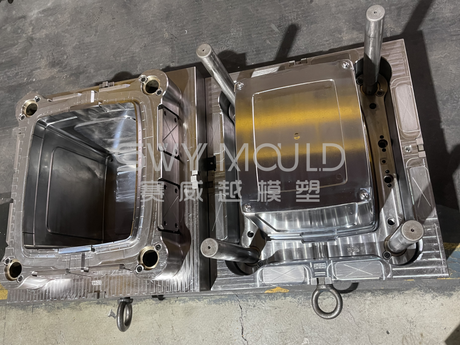
The mold base is the main supporting structure of the mold and is generally divided into an upper mold base (movable mold) and a lower mold base (fixed mold).
Punches, cavities, and their accessories are fixed to the mold base. In plastic injection molds, pressure plates and cavity components are securely mounted, and clamping mechanisms are provided as required.
Support plates, punch backing plates, fixed plates, ejector plates, pads, and ejector rod fixing plates are all standard support components with specific structural and functional roles.
Mold fixing and connections can be divided into rigid and elastic types:
Rigid connections: bolts and positioning pins
Elastic connections: commonly used between pressure plates and stripper plates
The upper and lower mold bases are guided and aligned using guide pillars and guide bushes to ensure accurate clamping movement and reliable connection during the forming process.
The key elements of mold design—including driving force and movement, mold surface structure, and overall mold structure—form the foundation of mold construction and operation. These principles summarize the core technologies and methods of mold design and serve as the basic guidelines for efficient, accurate, and reliable mold development.